Nissan Kicks
2019–present (P15) · HR16DE 1.6L / e-Power (HR16DE + EM47) · CVT / e-CVT
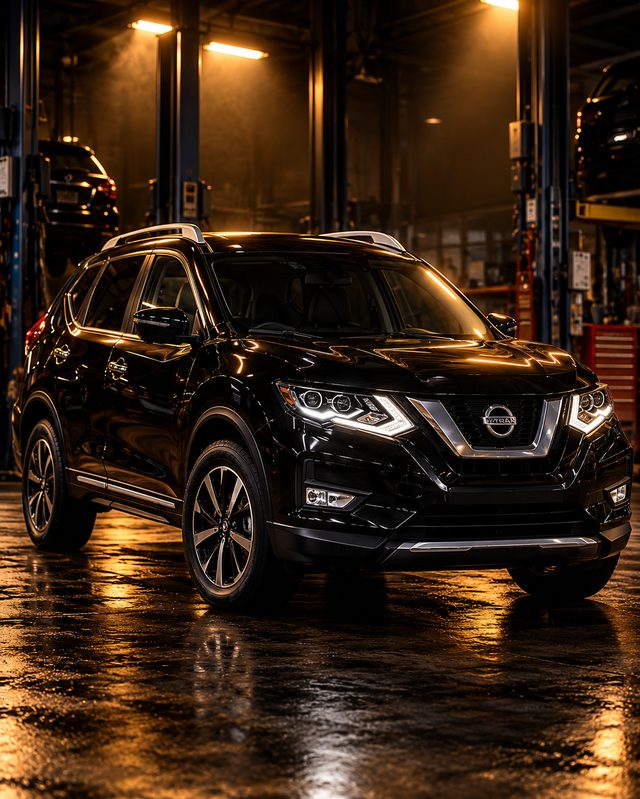
The Nissan Kicks P15 (2019+) is a compact crossover available in standard and e-Power hybrid variants in Malaysia. The e-Power system uses the petrol engine as a generator only — wheels are driven purely by the electric motor, giving EV-like driving feel. e-Power brake regeneration reduces pad wear significantly.
Nissan Kicks Common Problems Malaysia — P15 Standard & e-Power
Standard HR16DE: CVT fluid neglect leading to shudder and hesitation is the top concern — NS-3 every 40,000 km without fail. e-Power variants: high-voltage battery warning lights (often triggered by 12V auxiliary battery failure rather than the HV pack itself), and A/C efficiency issues in Malaysia's heat due to the electric compressor drawing from the HV battery. Both variants: cabin filter neglect reducing A/C airflow, and tyre wear from Malaysia's speed bumps on the low-profile crossover tyres.
💰Nissan Kicks Repair Cost Malaysia — P15
Kicks standard variant maintenance costs are similar to other Nissan CVT models. e-Power variants cost more for HV-system-related repairs — always confirm whether the issue is the 12V battery or the HV pack before committing to expensive repair. Parts availability for the P15 is good at authorised Nissan dealers and independent workshops. Being a newer model (2019+), most units in Malaysia are still within or near warranty period — check your warranty coverage before authorising out-of-warranty repairs.
📅Nissan Kicks Service Schedule Malaysia — P15
Standard HR16DE: engine oil 0W-20 full synthetic every 10,000 km, CVT NS-3 fluid every 40,000 km, air filter every 20,000 km, cabin filter every 15,000 km, iridium spark plugs every 60,000 km, brake fluid every 2 years, coolant first change at 60,000 km then every 2 years. e-Power: same intervals for petrol engine services; additionally inspect HV battery cooling filter (if equipped) every 20,000 km; 12V auxiliary battery every 3–4 years — AGM type required for stop-start system.
🛢️Nissan Kicks Engine Oil Malaysia — HR16DE 0W-20
Both standard and e-Power Kicks use the HR16DE 1.6L engine requiring 0W-20 full synthetic oil, approximately 3.7L capacity with filter. On the e-Power, the HR16DE runs as a generator and may operate at different load cycles than a conventional car — oil quality is equally important. Change at 10,000 km or 6 months whichever comes first. Nissan-approved SN/SP grade 0W-20; avoid 10W-40 or mineral grades which will increase engine wear and reduce fuel efficiency on this modern engine.
⚙️Nissan Kicks CVT Fluid & e-Power Drive Unit Malaysia
Standard Kicks: Xtronic CVT uses Nissan NS-3 fluid — change every 40,000 km, never substitute with generic ATF. Symptoms of neglected CVT: shudder at low speed, hesitation on acceleration, whine under load. e-Power: no traditional CVT or automatic gearbox — the EM47 electric motor drives the wheels directly through a reduction gear. The electric drive unit has its own gear oil; check the Nissan service manual for the specified interval (typically inspect at 60,000 km). Do not apply CVT fluid service recommendations to e-Power drive unit.
💨Nissan Kicks Air Filter Malaysia — P15
Kicks HR16DE air filter: replace every 20,000 km or sooner if driving in dusty conditions common in Malaysian construction zones. A clean air filter maintains HR16DE fuel efficiency — on the standard CVT variant, a dirty filter directly affects real-world fuel economy. On e-Power, the HR16DE runs as a generator; a restricted air filter increases generator load and reduces the efficiency of the entire e-Power system. OEM or equivalent panel filter; filter housing is accessible from the top of the engine bay.
🌡️Nissan Kicks Coolant Malaysia — HR16DE Long-Life
Kicks uses Nissan long-life coolant. First change at 60,000 km or 4 years, then every 2 years. On e-Power, the HV battery has a separate liquid cooling circuit — inspect HV battery coolant level separately if accessible (some e-Power variants have a sealed HV cooling circuit serviced at Nissan authorised workshops only). HR16DE coolant: thermostat and water pump are generally reliable on this engine. Never top up with tap water — use distilled water or pre-mixed coolant.
🛞Nissan Kicks Brake Pads Malaysia — Standard vs e-Power
Standard Kicks: front brake pads last 40,000–60,000 km; rear drums on base variants. Inspect pad thickness at every service. e-Power: regenerative braking handles most deceleration — front pads can last significantly longer than on a conventional car, sometimes 80,000–100,000 km depending on driving style. However, due to reduced braking frequency, brake discs on e-Power may develop surface rust patches from underuse — test brake feel regularly and inspect discs for corrosion at each service.
💿Nissan Kicks Brake Disc Malaysia — P15
Kicks front brake discs: ventilated discs on both standard and e-Power variants. On e-Power, surface corrosion from infrequent mechanical braking use is worth monitoring — light rust is normal but deep pitting requires disc replacement. Standard variant: replace discs when approaching minimum thickness, always paired with new pads. Malaysia's frequent heavy rain followed by dry periods creates a rust-promote cycle on brake discs — inspect at every annual service.
🔵Nissan Kicks Brake Fluid Malaysia
Kicks uses DOT 3 or DOT 4 brake fluid — DOT 4 recommended for Malaysia's heat and stop-start traffic. Change every 2 years regardless of mileage; brake fluid absorbs moisture from the air which lowers its boiling point and can cause brake fade under heavy use. On e-Power, the brake system combines regenerative braking with conventional hydraulic brakes — brake fluid condition is equally important as on conventional vehicles, as the hydraulic system activates whenever regen alone cannot provide sufficient stopping force.
🔋Nissan Kicks Battery Malaysia — 12V & e-Power HV Battery
Standard Kicks: 12V lead-acid battery, replace every 3–4 years; no special registration required. e-Power: two battery systems — (1) 12V auxiliary battery (AGM type, replace every 3–4 years; a weak 12V battery is the most common cause of e-Power warning lights and system faults), (2) high-voltage Li-ion traction battery (not user-serviceable, diagnosed and replaced at Nissan authorised workshop only; designed to last well beyond 150,000 km under normal use). Always resolve 12V battery health before diagnosing expensive HV battery issues.
⚡Nissan Kicks Alternator Malaysia — Standard vs e-Power Generator
Standard Kicks: conventional belt-driven alternator charges the 12V battery; failure signs are battery warning light, dimming accessories, and low voltage reading. e-Power: no conventional alternator — the HR16DE engine drives a dedicated AC generator (motor-generator unit) that charges the HV battery; the HV battery then powers a DC-DC converter to charge the 12V battery. A charging system fault on e-Power requires Nissan Consult diagnosis to distinguish between the motor-generator, HV battery, or DC-DC converter issue.
❄️Nissan Kicks Air Conditioning Malaysia — P15
Standard Kicks: belt-driven A/C compressor powered by HR16DE; R134a refrigerant; annual regas check recommended in Malaysia's heat. e-Power: electric A/C compressor powered directly from the HV battery — no belt-driven compressor. The electric compressor is more efficient but requires HV battery to be in good health for optimal A/C performance. Cabin filter (behind glovebox) every 15,000 km on both variants. If A/C is weak on e-Power and HV battery is healthy, check the electric compressor and refrigerant charge.
🪤Nissan Kicks Cabin Filter Malaysia — P15
Kicks cabin filter is located behind the glovebox — drop the glovebox door to access and slide out the filter. Replace every 15,000 km; activated carbon upgrade recommended for Malaysia's haze season. A clean cabin filter is particularly important on the e-Power because the electric A/C compressor works harder against restricted airflow, reducing both cooling efficiency and HV battery range. OEM or Bosch equivalent cabin filter.
🔄Nissan Kicks Tyre Guide Malaysia — P15
Kicks standard tyre size: 205/60 R16. OEM: Bridgestone Ecopia or Dunlop SP Sport. e-Power: same tyre size but the electric motor's instant torque delivery means tyre spin on loose surfaces is possible — match tyre grip to driving conditions. Recommended: Michelin Primacy 4 for longevity, Continental EcoContact 6 for wet grip. Check tyre pressure monthly — TPMS fitted on higher trim variants. Malaysia speed bumps at incorrect approach angles stress crossover tyre sidewalls; inspect for bulges every 20,000 km.
🎯Nissan Kicks Wheel Alignment Malaysia — P15
Kicks 4-wheel alignment recommended after tyre change or any kerb impact — Malaysia's pothole-heavy roads shift alignment frequently. Signs of misalignment: vehicle pulling to one side, uneven tyre wear, steering wheel off-centre. The Kicks' higher ride height compared to sedans makes it slightly more vulnerable to kerb impacts at wheel level. On e-Power, maintaining alignment is also important for maximising regenerative braking efficiency — misaligned tyres increase rolling resistance and drag down range.
🔥Nissan Kicks Spark Plugs Malaysia — HR16DE Iridium
Both standard and e-Power Kicks have the HR16DE 1.6L petrol engine which requires spark plugs. Use iridium plugs (NGK SILZKR7B11 or equivalent) — the HR16DE is designed for iridium, not copper. Replace every 60,000 km. On e-Power, the HR16DE may run in short bursts as a generator rather than continuous operation — iridium plugs handle the varying load cycles better than copper. Always use a torque wrench when fitting plugs on this engine (25–30 Nm) to avoid stripping the aluminium head.
⛓️Nissan Kicks Timing Chain Malaysia — HR16DE
HR16DE uses a timing chain — no timing belt to replace on a schedule. The chain is designed to last the lifetime of the engine with proper oil maintenance. On e-Power, the HR16DE may cycle on and off frequently as a generator — regular oil changes at 10,000 km are essential to keep the chain tensioner lubricated and prevent chain stretch from cold starts. Signs of chain wear: faint rattling on cold start that disappears after warm-up. Ignoring oil changes is the primary cause of premature chain wear on this engine.
🧹Nissan Kicks Carbon Buildup Malaysia — HR16DE
The HR16DE in the Kicks uses port injection — intake valve carbon buildup is minimal compared to direct injection engines. This is an advantage of port injection: fuel is sprayed onto the intake valves which helps self-clean deposits. Throttle body carbon buildup at 60,000–80,000 km may cause rough idle and low-speed hesitation — throttle body cleaning recommended. On e-Power, the HR16DE runs in short generator bursts which can cause slightly more carbon in the combustion chamber than continuous operation; using RON97 helps reduce deposit rate.
🔩Nissan Kicks Engine Mount Malaysia — P15
Kicks HR16DE engine mounts typically last 80,000–120,000 km. On e-Power, the HR16DE cycles on and off as a generator — this start-stop operation can accelerate engine mount wear slightly compared to a conventional engine running continuously. Worn mounts show as vibration at idle especially when the HR16DE generator kicks in, clunking during acceleration or deceleration, and shudder when the electric motor delivers instant torque. Malaysia heat degrades rubber mounts faster than temperate climates; inspect at every 60,000 km service.
🏎️Nissan Kicks Suspension Malaysia — P15
Kicks suspension: MacPherson struts front, torsion beam rear. Ride height is higher than a sedan, which benefits ground clearance on Malaysian roads but can make the car feel top-heavy on fast corners. Shock absorbers last 80,000–100,000 km. Malaysia's road conditions (speed bumps, potholes) stress strut mounts and suspension bushings more than smoother road countries — inspect at every major service. Signs of worn shocks: excessive body roll, bouncing over bumps, nosedive under braking.
💻Nissan Kicks OBD-II Diagnostic Malaysia — P15 & e-Power
Standard Kicks: OBD-II port reads engine, ABS, and airbag codes with any generic scanner. P0744 (CVT slip) and P0840 (CVT pressure) are the most important codes to watch. e-Power: basic fault codes accessible via OBD-II, but HV battery system, e-Power motor-generator, and DC-DC converter faults require Nissan Consult-III for full diagnosis — generic OBD-II tools cannot read e-Power-specific codes. Warning: do not attempt HV system diagnosis without proper insulated tools and training.
🔔Nissan Kicks Service Indicator Reset Malaysia — P15
Kicks service reminder: turn ignition to ON without starting, press and hold the trip meter reset button until the display resets. Both standard and e-Power use this method. The service indicator tracks oil change intervals only — it does not monitor CVT fluid, brake fluid, or (on e-Power) HV battery health. Follow manufacturer fixed-interval schedules for these items regardless of what the indicator shows. On e-Power, Nissan Consult can also reset service reminders more comprehensively.
💧Nissan Kicks Oil Leak Malaysia — HR16DE
HR16DE oil leak points to monitor: valve cover gasket (may seep at 80,000+ km), camshaft seals, crankshaft front seal at high mileage. The HR16DE is generally a tight engine with few oil leak complaints when serviced regularly. On e-Power, a significant engine oil leak is more serious than on a conventional car — the HR16DE operating under varying load as a generator can cause oil to smoke on hot components. Inspect the underside for oil stains at every major service.
🕹️Nissan Kicks Power Steering Malaysia — EPS P15
Kicks uses electric power steering (EPS) on both standard and e-Power variants — no hydraulic fluid to service. EPS is generally reliable; fault codes typically relate to the steering angle sensor (required for stability control calibration) or EPS motor overload from sustained low-speed manoeuvring (parking). After any suspension work or tyre change, recalibrate the steering angle sensor via OBD-II tool. The EPS contributes to better fuel economy vs hydraulic systems — no parasitic belt load on the HR16DE.
⛽Nissan Kicks Fuel Economy Tips Malaysia — Standard & e-Power
Standard HR16DE: real-world 9–11 L/100km city, 6.5–8 L/100km highway. Tips: correct tyre pressure, timely air filter, 0W-20 oil, avoid prolonged idling, use eco mode. e-Power: real-world 6–8 L/100km city (city efficiency is much better than standard because regen recovers braking energy), 7–9 L/100km highway (less advantage on highway as regen opportunities are fewer). e-Power tips: maximise regenerative braking by anticipating stops early, use B-mode for stronger regen, keep A/C at moderate setting to reduce HV battery draw, avoid aggressive acceleration which forces HR16DE into maximum generator mode.
📈Nissan Kicks Resale Value Malaysia — P15
Kicks holds reasonable resale value as a relatively new model (2019+) with growing popularity in Malaysia. e-Power variants command a premium over standard in the used market due to lower running costs and the novelty of the e-Power drivetrain. Full service history is important, especially documented CVT fluid changes (standard) or HV battery health records (e-Power). Buyers are increasingly aware of HV battery condition — any warning lights in the car's history will reduce resale value significantly. Keep service history complete and address any fault codes before selling.
✅Buying a Used Nissan Kicks Malaysia — Checklist
Standard variant checks: (1) CVT fluid — light pink/red, dark = neglect. (2) OBD scan for CVT codes P0744/P0840. (3) A/C cooling performance. (4) Service history for CVT fluid intervals. (5) Tyre condition and alignment. e-Power specific checks: (1) Verify no e-Power warning lights on the cluster — if any appear, have HV system scanned at Nissan dealer before purchase. (2) Check 12V auxiliary battery age — often the cause of e-Power system warnings, easy and cheap to fix. (3) Test regenerative braking feel — smooth and consistent is normal. (4) HV battery health check via Nissan Consult at authorised workshop if possible.
📖Nissan Kicks P15 Malaysia — Standard vs e-Power Guide
Kicks P15 launched in Malaysia in 2019. Standard variant: HR16DE 1.6L + Xtronic CVT — conventional powertrain, simpler maintenance. e-Power (launched later): HR16DE as generator + EM47 electric drive — EV-like driving feel, better city fuel economy, significantly lower brake pad wear, higher initial price. Choosing between them: e-Power is better for city commuters wanting near-EV efficiency without range anxiety; standard is simpler to maintain and easier to find independent workshop support for. Both share the same exterior dimensions, safety features, and comfort levels.
⛽Nissan Kicks Fuel Pump Malaysia — HR16DE
Standard Kicks: conventional in-tank electric fuel pump. Keep fuel above 1/4 tank — fuel cools and lubricates the in-tank pump; running consistently on a near-empty tank accelerates pump wear. HR16DE uses port injection so fuel pressure requirements are lower than direct injection — pump is generally reliable beyond 150,000 km. e-Power: same in-tank pump setup; the HR16DE's generator cycles add varying load but pump specification handles this. Signs of failing pump: hard start, stalling under load, fuel pressure fault codes.
🔧Nissan Kicks Fuel Injector Malaysia — HR16DE Port Injection
HR16DE uses port fuel injection — injectors spray onto the intake valves rather than directly into the cylinder. Port injectors are less prone to carbon fouling than direct injectors and rarely need cleaning before 150,000 km under normal use. Using quality fuel (RON95 or RON97) reduces deposit buildup. If rough idle or misfire codes appear, check spark plugs first before suspecting injectors. Injector cleaning service only if fault codes or fuel trims indicate a lean condition traced to injector flow.
🌡️Nissan Kicks Radiator Malaysia — HR16DE Cooling
HR16DE radiator is generally trouble-free to 150,000 km. Common failure mode: plastic tank cracks at the metal-to-plastic junction — typically at high mileage on original radiators. On e-Power, the HR16DE radiator cools both the engine and (via separate circuit) the power electronics — a radiator failure has broader consequences than on the standard variant. Flush coolant at 60,000 km first interval, then every 2 years to prevent scale buildup that restricts flow. Malaysia's hot weather increases radiator thermal stress.
🌡️Nissan Kicks Thermostat Malaysia — HR16DE
Kicks HR16DE thermostat failure is uncommon but occurs at high mileage. A stuck-open thermostat causes the engine to run cold — fuel consumption rises, heater output is poor, and the engine takes longer to reach operating temperature. On e-Power, a cold-running engine generates less electrical energy per fuel unit, reducing overall system efficiency. Stuck-closed causes overheating — more serious. If temperature gauge reads low after full warm-up, thermostat is the first suspect. Thermostat is accessible and not expensive to replace.
⚠️Nissan Kicks Head Gasket Malaysia — HR16DE
HR16DE head gasket failure is rare under normal maintenance — the engine must have overheated severely for gasket damage to occur. Risk factors: ignored temperature gauge spikes, failed thermostat left unrepaired, blocked radiator. On e-Power, the HR16DE running as a generator under HV battery demand adds heat load — if the cooling system is compromised, the risk of overheating and head gasket damage increases. Prevention: maintain coolant level, replace thermostat if temperature runs low (pre-failure warning), never ignore the temperature warning light.
🔩Nissan Kicks CV Joint Malaysia — P15
Kicks front-wheel-drive CV joints last 100,000–150,000 km with intact boots. CV boot inspection at every major service — a torn boot leads to grease loss and dirt ingress, destroying the joint within 20,000 km. Clicking on full-lock turns = outer CV joint worn. On e-Power, the electric motor delivers instant torque to the front wheels via CV joints — boot condition is equally important as on the standard variant. Malaysia speed bumps at angle stress CV boots; inspect underside for grease splatter that indicates a torn boot.
🪟Nissan Kicks Window Regulator Malaysia — P15
Kicks window regulator (cable-type) may fail at 80,000–120,000 km — symptoms include window dropping suddenly, grinding noise, or movement in one direction only. Driver's window is most frequently used and typically fails first. Malaysia's humidity and heat cycles stress window regulator cables and plastic components. Replacement is straightforward; OEM or quality aftermarket available. No special procedures for e-Power vs standard — the window system is identical on both variants.
🔴Nissan Kicks Check Engine Light Malaysia — P15 & e-Power
Standard Kicks common codes: P0300–P0303 (misfire — check plugs), P0744 (CVT slip — urgent CVT service), P0420 (catalyst efficiency). e-Power: additional codes relate to the e-Power system — P3000–P3999 range for HV system faults, often triggered by a weak 12V auxiliary battery rather than a true HV fault. On e-Power, if the check engine light appears with e-Power warning light, do not continue driving — have the vehicle scanned immediately. A standalone check engine light without e-Power warning is usually a minor issue (O2 sensor, catalyst, throttle body).
🚨Nissan Kicks ABS Warning Light Malaysia — P15
Kicks ABS warning light is most commonly caused by a wheel speed sensor fault — Malaysia's roads and car washing habits accelerate sensor connector corrosion. Faulty sensor replacement is the typical fix. On e-Power, the ABS/brake system integrates with the regenerative braking controller — if ABS and regenerative braking warning lights appear together, the integrated braking system requires diagnosis at an authorised Nissan workshop as it involves HV-connected components. A standalone ABS light (no e-Power lights) is usually a simple wheel speed sensor issue.
📋Nissan Kicks 100,000 km Service Malaysia — P15
Standard 100,000 km checklist: engine oil + filter, iridium spark plugs, CVT fluid flush (NS-3), brake fluid flush, coolant check/top-up, cabin filter, air filter, timing chain inspection, CV boot check, tyre condition + alignment, all brake components, battery test, throttle body inspect. e-Power additional checks: 12V auxiliary battery test (replace if >4 years), HV battery health check at Nissan authorised workshop, electric compressor A/C system check, e-Power drive unit fluid inspection, check for any pending HV system fault codes via Consult. e-Power 100,000 km service should include Nissan authorised workshop involvement for HV system checks.
📄Nissan Kicks Car Insurance Malaysia — P15
Kicks insurance in Malaysia: as a compact crossover in the B-segment, premiums are competitive. e-Power variants have a higher market value than standard, resulting in slightly higher premiums — but the lower running costs of e-Power offset this over time. Both variants benefit from the Kicks' active safety systems (AEB on higher trims) which can qualify for safety feature discounts with some insurers. Compare quotes annually as insurer pricing for hybrid crossovers is becoming more competitive as these vehicles become more common.
💰Nissan Kicks Spare Parts Price Malaysia — P15
Standard Kicks parts are available at Nissan dealers and independent workshops — HR16DE parts are shared across multiple Nissan models. e-Power specific components (HV battery, motor-generator, DC-DC converter, electric compressor) are only available at Nissan authorised workshops and carry higher costs than conventional parts. For routine maintenance items (oil filter, air filter, cabin filter, brake pads, spark plugs, CVT fluid), aftermarket options are widely available and competitively priced. Being a 2019+ model, overall parts supply is robust with growing aftermarket availability.
✅Nissan Kicks Puspakom Guide Malaysia — P15
Kicks Puspakom inspection (B2 for renewal, JP2 for transfer): ensure all lights function, wipers in good condition, horn works, tyre tread above minimum, no structural rust. Check engine light must not be illuminated. Standard variant: straightforward inspection. e-Power: additionally ensure no HV system warning lights are on — an active e-Power or hybrid system warning will likely cause a Puspakom failure. Brake performance test: standard variant normal. e-Power: combined regen + hydraulic braking should pass the brake test; inform the inspector it is a hybrid if questioned about brake behaviour.
💧Nissan Kicks Valve Cover Gasket Malaysia — HR16DE
HR16DE valve cover gasket may begin to seep at 80,000–120,000 km. The gasket seals the valve cover to the cylinder head — oil seeping onto the exhaust manifold creates a burning smell and potential fire hazard if ignored. Being a relatively modern engine design, the HR16DE is less prone to valve cover leaks than older Nissan engines but should be inspected at every major service. Replacement is straightforward and not expensive. On e-Power, an oil leak near hot components should be addressed promptly due to the varying thermal loads the HR16DE experiences.
🔧Nissan Kicks Throttle Body Cleaning Malaysia — HR16DE
HR16DE throttle body carbon buildup begins at 60,000–80,000 km — symptoms are rough idle, low-speed hesitation, and sluggish response from rest. Port injection means fuel washes the intake port but not the throttle body, so carbon still accumulates there from blowby gases via the PCV system. Cleaning: spray-based without removal for mild buildup; full removal and clean for heavy deposits. On e-Power, rough idle is more noticeable when the HR16DE fires up as a generator — throttle body cleanliness is important for generator efficiency. Always perform idle relearn after throttle body cleaning.
💡Nissan Kicks Headlight Malaysia — P15
Higher Kicks trims feature full LED headlights; base variants use halogen projectors. Halogen variants: LED bulb upgrade is popular (H4 LED or H11 low beam) — confirm bulb fits the projector housing for correct beam pattern and heat management. LED headlights on higher trims are generally excellent and rarely fail. Polycarbonate lens yellowing from Malaysia UV exposure begins at 5–7 years; lens restoration or replacement available. The Kicks' higher bonnet line (vs sedans) means the headlights are positioned higher — beam aim adjustment may be needed after any front-end work.
🔄Nissan Kicks Tyre Rotation Malaysia — P15
Kicks is front-wheel drive — front tyres wear faster than rear due to engine weight and drive torque. Rotate every 10,000 km using front-to-rear or cross pattern. On e-Power, the electric motor's instant torque can accelerate front tyre wear compared to a conventional CVT powertrain, making regular rotation even more important. Combine rotation with alignment check — Malaysia's potholes shift alignment regularly. Consistent rotation extends the overall tyre set life significantly and maintains balanced handling.
🌧️Nissan Kicks Wiper Replacement Malaysia — P15
Kicks front wipers: replace every 12–18 months in Malaysia's heavy rain season. The P15 uses frameless (beam) wipers on higher trims — confirm blade type before purchasing replacements (beam blades vs conventional frame). Rear wiper (if fitted) at the same interval. Silicone blade upgrade for better performance in tropical downpours and extended life in UV exposure. Never run wipers on a dry windscreen. Check washer fluid level monthly — Malaysia dust requires frequent windscreen cleaning.
🔍Nissan Kicks O2 Sensor Malaysia — HR16DE
HR16DE has upstream (air-fuel ratio/wideband lambda) and downstream (catalyst monitor) O2 sensors. Common codes: P0135 (upstream sensor heater fault), P0420 (catalyst efficiency — often downstream sensor or catalyst degradation), P0141 (downstream heater). On e-Power, the HR16DE's varying load cycles as a generator can stress the O2 sensors differently — Malaysia RON95 quality and variable generator duty cycles mean sensor inspection at 80,000 km is worthwhile. Use OEM-quality sensors; cheap aftermarket wideband sensors can cause persistent fuel trim issues.
🔩Nissan Kicks Control Arm & Ball Joint Malaysia — P15
Kicks lower control arm and ball joint inspection at 80,000 km. The Kicks' higher ground clearance means slightly more suspension travel than a sedan — ball joints and bushings work through a greater range of motion on Malaysia's uneven surfaces. Worn ball joint symptoms: clunking over bumps, uneven tyre wear, vague steering. The front subframe bushings should also be checked at 100,000+ km. On e-Power, the electric motor's instant torque during acceleration applies more stress to control arm bushings — inspect these at every major service for cracking or collapse.
🗂️Nissan Kicks Workshop Cases Malaysia — 4M Car Care
Real cases from our Bandar Sri Damansara workshop: (1) Kicks e-Power 2021, 55,000 km — customer reported e-Power warning light. Scanned: 12V auxiliary battery voltage low causing HV system shutdown fault. Replaced 12V AGM battery, all warning lights cleared, customer thought HV battery was failing. (2) Kicks standard 2020, 42,000 km — CVT shudder at 40–60 km/h. CVT NS-3 fluid dark and degraded (never changed). Full CVT fluid flush resolved shudder completely — customer advised strict 40,000 km CVT change interval going forward. (3) Kicks e-Power 2022, 28,000 km — A/C not cooling effectively. Electric compressor operating normally but cabin filter completely blocked (never changed since new). Replaced cabin filter, A/C airflow restored to full capacity. (4) Kicks standard 2019, 78,000 km — rough idle and hesitation from cold start. Throttle body carbon causing IAC hunting. Throttle body removed, cleaned, idle relearn performed, idle smooth.