
2026-09-22 · 4 min read
Manual Gearbox Oil: How Often to Change and What Spec to Use
Manual gearbox oil lubricates the gears and synchros. Neglecting it leads to difficult gear changes and noise. This guide covers service intervals, GL-4 vs GL-5 specs and signs of worn oil.
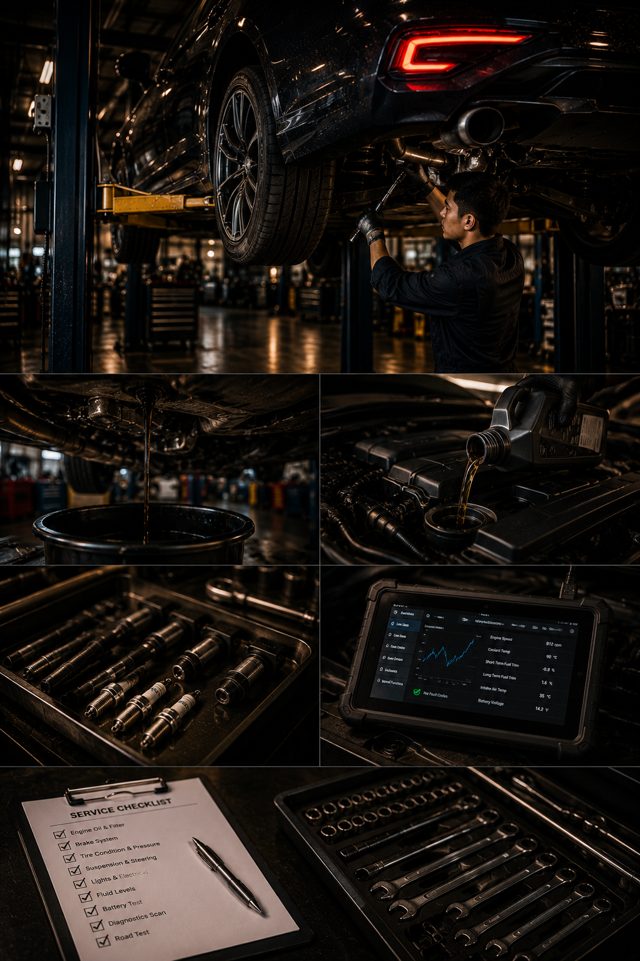
What manual gearbox oil does
Manual gearbox oil lubricates the gear sets and synchronisers, reduces metal-on-metal wear and helps the synchros mesh smoothly during gear changes. Without it, shifting becomes difficult and gearbox damage follows.
Unlike ATF, manual gearbox oil is much thicker (typically 75W-90 or 75W-80). Some 4WD or performance vehicles use 75W-140.
Recommended service interval
General recommendation is every 40,000–60,000 KM or every 2–3 years, whichever comes first. Malaysia's heat accelerates oil oxidation, so don't exceed 60,000 KM.
If you frequently drive mountain roads, tow loads, or the car has high mileage, shorten the interval to 30,000–40,000 KM.
GL-4 vs GL-5 — what's the difference?
GL-4 suits most manual petrol cars and MPVs. It contains moderate extreme-pressure (EP) additives compatible with brass synchros — the standard in most Japanese and local cars. GL-5's higher EP concentration corrodes brass, causing difficult shifts or synchro damage.
GL-5 is for certain 4WD differentials (e.g., Jimny front and rear diffs) where higher EP performance is needed. Unless the manufacturer explicitly specifies GL-5 for the gearbox, do not use it.
Signs the oil is due
• Shift resistance, especially on a cold engine • A grinding or notchy feeling at low-speed gear changes • Faint whine from the gearbox area • Oil stain under the car from a leaking seal
Visit 4M Car Care for a gearbox oil check. We inspect the oil condition and seals, quote honestly before touching anything. WhatsApp to book.